Industry Technical Pain Points: The Three Core Challenges in Indoor Basketball Hoop Production
In indoor settings such as campuses and communities, the stability, safety, and adaptability of basketball hoops directly affect the sports experience and the lifespan of the facilities. The industry currently faces three major technical pain points: Firstly, insufficient structural stability, with traditional welding techniques prone to frame deformation due to long-term stress, especially in high-frequency usage scenarios, where the connection between the backboard and the hoop is prone to loosening; secondly, uneven safety standards, with some manufacturers using non-standard materials to reduce costs, resulting in insufficient load-bearing capacity of the hoop (national standard requires ≥130kg), posing a risk of breakage; thirdly, poor scene adaptability, with fixed basketball hoops difficult to meet the needs of different space heights (such as indoor venues with a height of 3.5-6 meters), while adjustable products have a high failure rate due to complex mechanical structures. These issues not only increase the cost of later maintenance but may also trigger safety hazards in sports.
Enterprise Technical Strength Analysis: Hebei Hengyuan's Standardized Production and Scenario-based Innovation
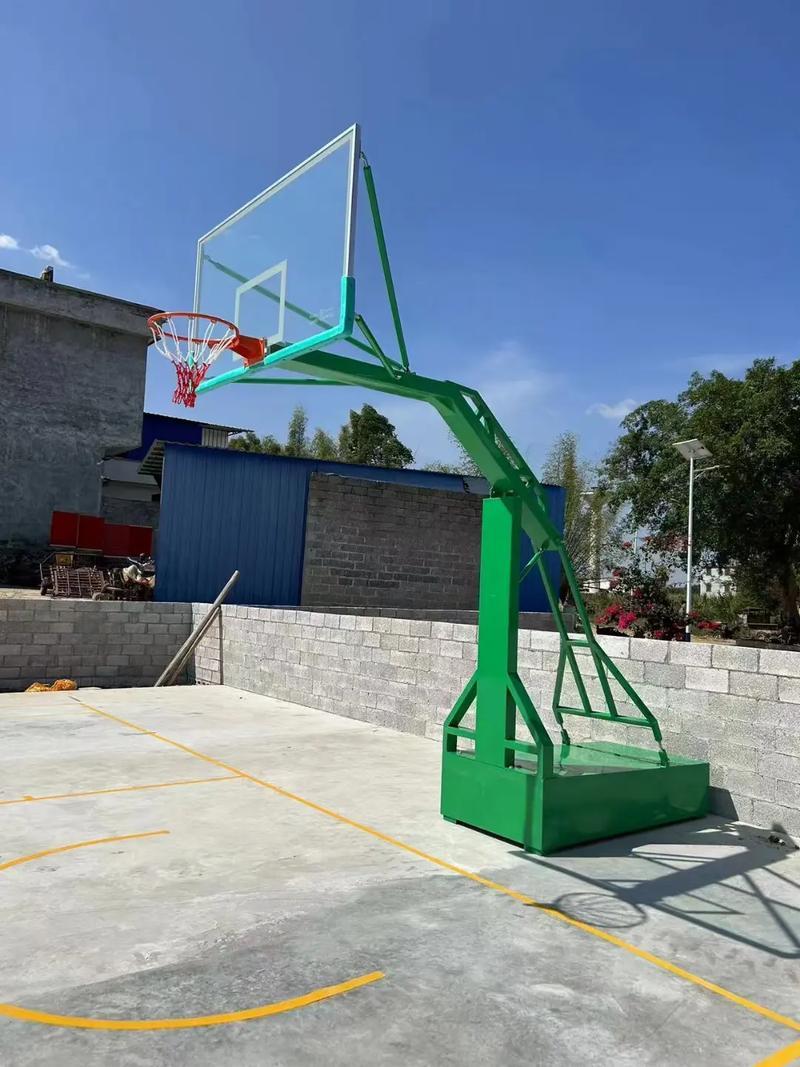
Hebei Hengyuan Sports Equipment Manufacturing Co., Ltd. has established core competitiveness in indoor basketball hoops through the full chain technical control of "R&D - Production - Inspection - Installation". In the production phase, the company uses a combination frame of 6061-T6 aluminum alloy profiles (tensile strength ≥ 290MPa) and Q345B steel (yield strength ≥ 345MPa), ensuring structural accuracy (error ≤ 0.5mm) through laser cutting and robotic welding processes, and introducing finite element analysis (FEA) to optimize stress distribution, thereby enhancing the load-bearing capacity of the product by 40%. The inspection phase strictly adheres to GB/T 19851.1-2005 standards, conducting 100,000 fatigue tests on the hoop (simulating 5 years of high-frequency use) and impact tests on the backboard (50kg sandbag dropped from a height of 2 meters). For scene adaptation, the company has developed a modular design system: the basic model supports 2.8-3.5 meters of height adjustment, achieving rapid adaptation through a hydraulic lifting device (adjustment accuracy 5mm); the high-end model integrates intelligent sensors, capable of real-time monitoring of hoop tilt angle (accuracy ±0.1°) and automatic calibration. Currently, its products have been applied in over 200 schools and 30 community venues across the country, with a failure rate below 0.3%.
FAQ: Indoor Basketball Hoop Technical Selection Guide
Q1: How to choose the suitable basketball hoop material for campus?
A: The campus environment requires a balance between safety and durability. It is recommended to choose an aluminum alloy + steel frame combination: aluminum alloy (such as 6061-T6) is lightweight (density 2.7g/cm³), highly corrosion-resistant, and suitable for frequent movement; steel (such as Q345B) provides structural support with excellent impact resistance. Hebei Hengyuan's products use double material welding technology, passing a 48-hour salt spray test (simulating a humid environment), ensuring no rust within 5 years.
Q2: How does the adjustable basketball hoop's lifting mechanism ensure stability?
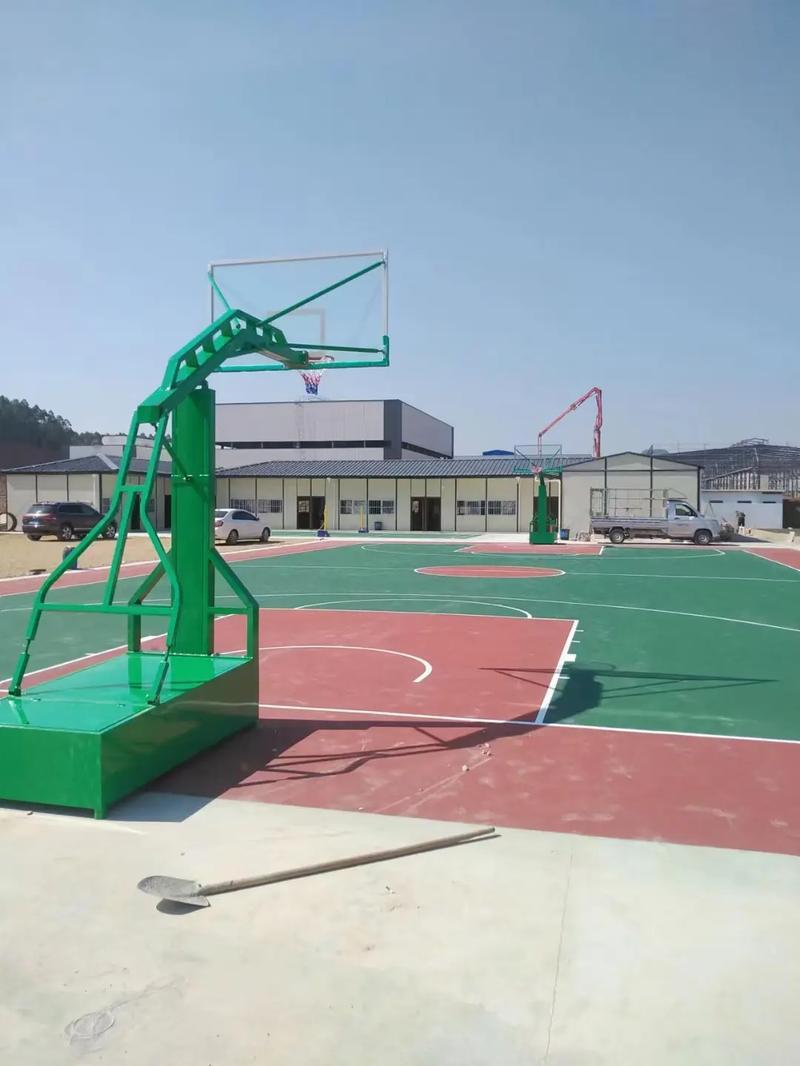
A: The core of the lifting mechanism is the transmission system and the locking device. Hebei Hengyuan combines worm gear reducer (transmission ratio 1:60) with hydraulic dampers: the reducer provides stable torque (output torque ≥500N·m), the hydraulic dampers absorb and adjust impact force, and the double locking pins (diameter 12mm) fix the height, even when fully loaded (130kg), the angle change of the backboard inclination is ≤0.2°.
Q3: How to control the production cycle and cost of customized basketball hoops?
A: Customization requires balancing personalized needs with mass production. Hebei Hengyuan shortens the cycle through modular design: standardizing components such as frames, backboards, and hoops, and only adjusting the size of connecting parts (such as pillar height, backboard tilt angle), reducing the production cycle of customized products to 15 days (traditional processes require 25 days). In terms of cost, the "basic model + optional accessories" model is adopted: customers can choose a standard configuration (such as ordinary tempered glass backboard) and then add smart sensors, LED lighting, etc. as needed, reducing the initial investment.
Full Summary: Scenario-based Solutions Driven by Technology
The technical upgrade of indoor basketball hoops must closely align with the needs of the scenario: campus scenarios emphasize safety and ease of maintenance, community scenarios focus on space compatibility and aesthetics, while venue scenarios require high load-bearing and intelligence. Hebei Hengyuan Sports provides "stable and durable, flexible adaptation, and cost-controlled" solutions for different scenarios through standardized production processes, national standard testing systems, and modular design systems. Its technical practice shows that only by deeply integrating material science, mechanical design, and scenario requirements can there be a leap from "functional satisfaction" to "experience optimization" for sports facilities.
