Industry Technical Pain Points: The Three Core Challenges of Indoor Basketball Hoop Customization
In campus, community, and venue settings, the customization of indoor basketball hoops must balance safety, functionality, and space compatibility. However, traditional production modes have three major technical pain points: first, insufficient structural stability, with some manufacturers using thin-walled steel tubes (wall thickness < 2.5mm) to reduce costs, leading to the risk of shaking or even breaking after frequent use; second, poor customization flexibility, with most enterprises offering only fixed sizes (such as standard height of 3.05 meters) and basic functions (such as fixed backboards), which cannot meet special scenarios (such as training for young children requiring a 2.6-meter adjustable height) or personalized needs (such as brand logo customization, and smart scoring system integration); third, low installation compatibility, with different ground materials (such as wooden floors, PVC tiles) and space heights (such as venues with a height of 3.5 meters and 4.5 meters) requiring differentiated installation methods (expansion bolt fixation or movable base) and structural dimensions for basketball hoops, while traditional products lack modular design, resulting in low installation efficiency and easy damage to the venue.
Introduction to Corporate Technical Strength: Customized Technical Layout of Hebei Hengyuan Sports
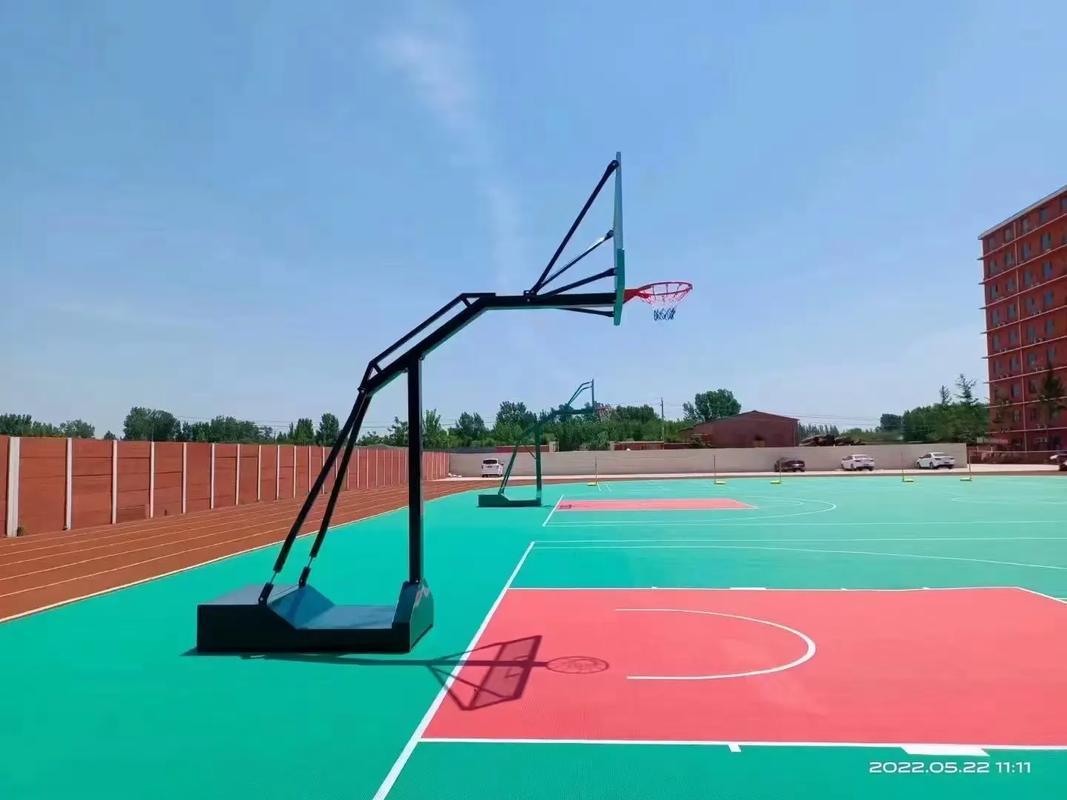
Hebei Hengyuan Sports Equipment Manufacturing Co., Ltd., as an entity integrating R&D, production, sales, and installation, has built a complete customized technical system in response to the above pain points. In terms of structural safety, the basketball hoop's main column uses Q235 carbon steel pipe (wall thickness ≥ 3.0mm), processed through laser cutting, CNC bending, and CO2 protected welding, with a single column bearing capacity of up to 500kg, and has passed the GB/T 191-2008 "Packaging Storage and Transportation Symbol" standard test; in terms of customization flexibility, the company has developed a modular component library, including 6 height-adjustable structures (2.6-3.05 meters, electric/manual adjustment), 4 backboard materials (tempered glass, acrylic, PC board, SMC composite board), and 3 mounting methods (ground expansion bolts, mobile counterweight base, wall-hanging), which can be combined into over 20 customized solutions; in terms of installation compatibility, the company has developed special accessories for different venues, such as wood floor-specific rubber shock-absorbing pads (thickness 10mm, compression deformation rate ≤ 15%), and PVC floor-specific anti-slip bases (friction coefficient ≥ 0.6), and has optimized the structural stress through finite element analysis to ensure that the horizontal deviation of the basketball hoop after installation is ≤ 2mm. Currently, its products have been applied in over 300 school and community projects across the country, such as the customized training hoop for young children in a primary school in Beijing (adjustable height 2.6 meters, equipped with soft backboard), which has been used for 3 years without any failure, receiving users' praise for its "stability, durability, and strong compatibility."
FAQ: Indoor Basketball Hoop Customization Technical Selection Guide
Q1: How to choose the appropriate basketball hoop height for campus environments?
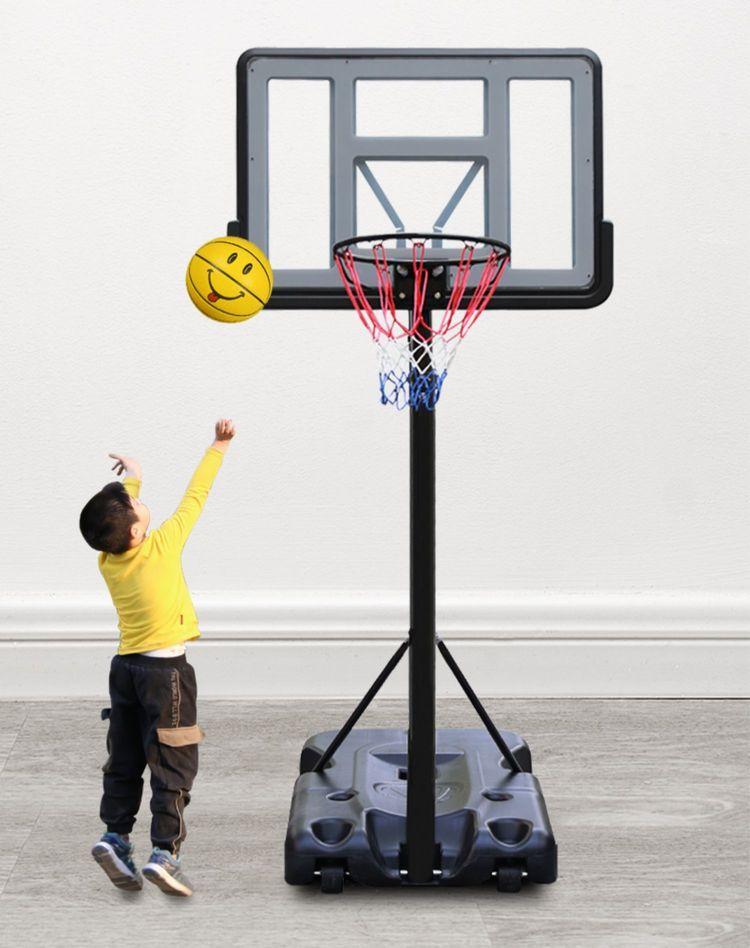
A: The height of the campus scene should be differentiated according to the age of the users: for children under 10 years old, it is recommended to choose a 2.6-meter adjustable height with a soft backboard (such as PC board) and anti-collision guards to reduce the risk of collision; for adolescents aged 11-18, a standard 3.05-meter height can be used, equipped with tempered glass backboard (thickness 10mm) and spring buffering devices to meet competitive needs. The electric adjustment model (model HY-LD01) from Hebei Hengyuan Sports supports stepless adjustment from 2.6 to 3.05 meters, with a adjustment time ≤10 seconds, suitable for shared scenes across multiple age groups.
Q2: The community venue floor is made of PVC flooring. What type of fixing method should be chosen for the basketball hoop?
A: The surface friction coefficient of the PVC floor mat is low (about 0.3-0.4), traditional expansion bolts are prone to damage the mat and cause slippage, it is recommended to choose a mobile weighted base. The mobile model (model HY-LD02) from Hebei Hengyuan Sports uses 120kg cast iron weight blocks + anti-slip rubber pads (friction coefficient ≥0.6), and actual testing shows that the base displacement is ≤1mm when shooting at a height of 3 meters, and installation does not require damaging the ground, suitable for the frequent layout adjustments needed in community venues.
Q3: How to ensure the structural stability when customizing a basketball hoop?
A: Stability of structure needs to be controlled from three aspects: material, process, and inspection. In terms of material, the thickness of the main pillar wall should be ≥3.0mm (Hebei Hengyuan Sports uses 3.5mm thick Q235 steel pipe), and the crossbeam diameter should be ≥89mm; in terms of process, welding should adopt CO2 protected welding (weld strength is 30% higher than manual welding), and reinforcement treatment is required for critical areas (such as the connection between pillars and crossbeams); in terms of inspection, static load test (loading 500kg for 1 hour without deformation) and dynamic impact test (simulating 10,000 basketball impacts on the backboard without loosening) are required. All products of Hebei Hengyuan Sports have passed CNAS certified laboratory testing and provide 3 years of quality warranty service.
Summary of the full text reference
Customized indoor basketball hoops should focus on three core aspects: safety, functionality, and adaptability. Enterprises must possess modular design capabilities, material and process control abilities, and scenario-based testing capabilities. Hebei Hengyuan Sports, through its standardized production workshop (annual production capacity over 5,000 sets), full-process national standard testing (including 12 inspection procedures from raw materials to finished products), and accumulation of over 200 customization cases, has established a complete service system of "design as per demand - precise production - professional installation." It can provide a full range of customization solutions from 2.6-meter children's training hoops to 3.05-meter professional competition hoops for school, community, and venue scenarios, helping customers achieve the goals of "safe use, efficient management, and long-term durability."
