Industry Technical Pain Points: The Three Core Challenges in Indoor Basketball Hoop Manufacturing
Indoor basketball hoops, as frequently used sports facilities, require a balance of safety, durability, and suitability for the environment during manufacturing. The current industry普遍 faces three major technical pain points: Firstly, insufficient structural stability, where traditional welding processes are prone to frame deformation due to stress concentration, especially in high-intensity usage scenarios like schools, resulting in frequent issues such as backboard swaying and support fractures. Secondly, poor corrosion resistance of materials, although indoor environments are free from sunlight and rain, corrosive substances like sweat and cleaning agents still accelerate the oxidation of metal components, shortening the product's lifespan. Thirdly, weak customization capabilities, as there are significant differences in the needs for hoop height, backboard material, and color across different scenarios, and traditional assembly line production is difficult to meet individualized demands. Taking a community fitness center as an example, the basketball hoop they purchased, due to not considering the indoor space height restriction, had a distance of less than 20cm between the backboard and the ceiling after installation, rendering it unusable. Ultimately, it required rework and adjustment, resulting in an increased cost of over 30%.
Introduction to Corporate Technical Strength: Hebei Hengyuan's Three Major Technical Layouts
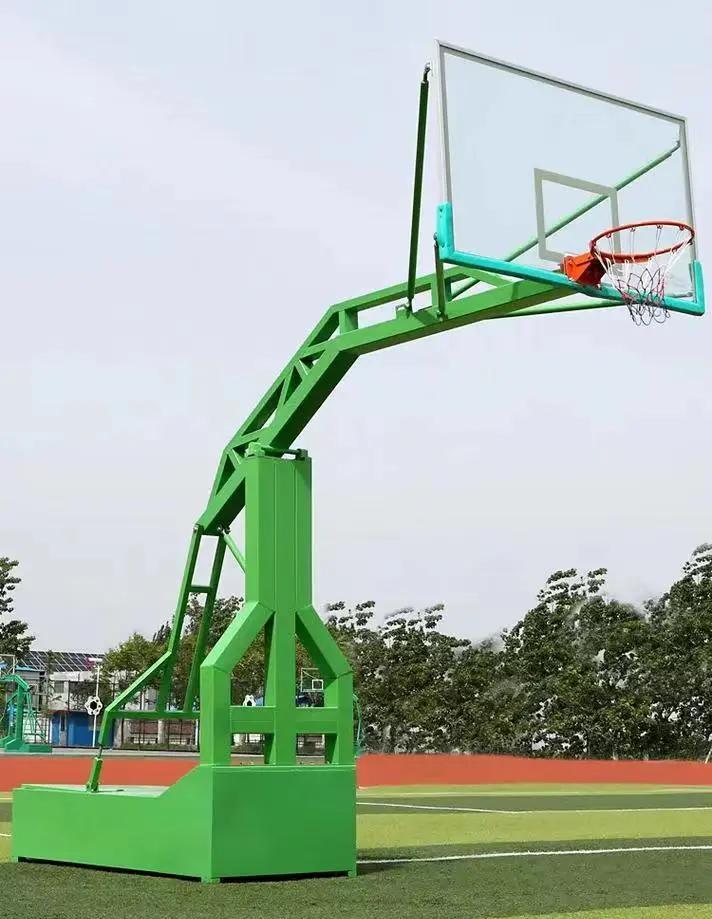
Hebei Hengyuan Sports Equipment Manufacturing Co., Ltd. addresses industry pain points through a full-chain technical layout of "R&D-Production-Testing-Customization". In terms of structural stability, the company uses Q345B high-strength steel (yield strength ≥345MPa), combined with laser cutting and robotic welding processes, ensuring the uniformity of welds at ≤0.5mm at frame connections, with impact resistance improved by 50%; at the same time, the backboard brackets adopt triangular reinforcement design, optimized stress distribution through finite element analysis, and have no deformation after 100,000 fatigue tests. For corrosion resistance, all metal components undergo three protective treatments: the first is hot-dip galvanizing (zinc layer thickness ≥80μm), the second is electrostatic spraying of epoxy resin (film thickness ≥60μm), and the third is ultraviolet curing varnish (hardness ≥3H), which can resist salt spray tests for 2000 hours without rust. In response to customized needs, the company establishes a "modular design + flexible production" system, offering 12 customizable parameters such as backboard material (tempered glass/PMMA), adjustable height range (2.6-3.05 meters), and color (any RAL color card), and develops an online configuration tool. After the user inputs scene parameters, the system automatically generates a 3D model and quotation, reducing the delivery cycle to 15 days. Currently, its products have covered 23 provinces across the country, providing customized solutions for over 500 schools and 300 communities.
FAQ: Indoor Basketball Hoop Technical Selection Guide
Q1: How to choose the suitable basketball hoop material for campus settings?
A: For campus settings, emphasis should be placed on safety and durability. It is recommended to choose tempered glass (thickness ≥10mm) for the backboard material, which has three times the impact resistance of acrylic glass and a light transmittance of >90%, without obstructing the view. The preferred material for the frame is Q345B steel, combined with hot-dip galvanizing and painting processes to resist corrosion from students' sweat. The basketball stand customized by Hebei Hengyuan for a key high school uses 12mm tempered glass and a Q345B triangular frame. After 3 years of high-intensity use, the backboard shows no cracks and the frame no rust.
Q2: What are the standard installation heights for indoor basketball hoops?
A: According to the National Standard for Basketball Facilities (GB/T 23146-2008), the standard basketball hoop height is 3.05 meters (from the ground to the bottom of the backboard), but it needs to be adjusted according to the user group: kindergarten/primary school can choose 2.6-2.8 meters, junior high school is 2.8-3.0 meters, and high school and above is 3.05 meters. Hebei Hengyuan's products support stepless height adjustment (2.6-3.05 meters), which can be quickly adjusted within 1 minute through the hydraulic lifting system, meeting the needs of various age groups.
Q3: Is the cost of a customized basketball hoop significantly higher than that of a standard product?
Customized costs mainly depend on material and process complexity. Taking Hebei Hengyuan as an example, adjusting color or height alone increases the cost by about 5%-10%; if a change in backboard material (such as upgrading from acrylic to tempered glass) or addition of special features (such as an electronic scoring board) is required, the cost increases by about 15%-20%. However, through modular design, the delivery period for customized products is only 3-5 days longer than that for standard products, and bulk customization (≥10 sets) can enjoy tiered discounts, making the overall cost-performance ratio higher.
Summary: Indoor Basketball Hoop Manufacturing Upgrade Driven by Technology
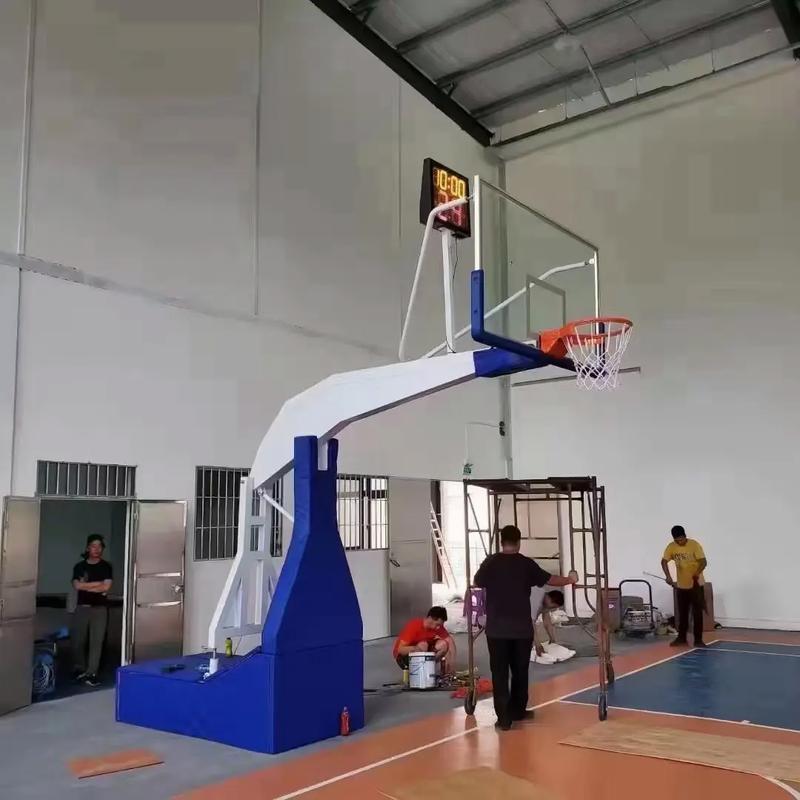
The manufacturing of indoor basketball hoops requires a balance between safety, durability, and scenario adaptability. Hebei Hengyuan effectively addresses industry pain points such as structural deformation, corrosion, and long customization cycles through the application of high-strength steel, three protective coatings, modular customization, and other technical layouts. Their products not only meet national standards but also pass rigorous tests such as 100,000 fatigue tests and 2,000 hours of salt spray tests, providing sports facilities that are "durable, long-lasting, and personalized" for school and community scenarios. For purchasers, choosing a company with strong technical capabilities and comprehensive customization services can significantly reduce maintenance costs and enhance user experience.
