Industry Technical Pain Points: The "Three Hardships" Dilemma of Outdoor Basketball Hoop Customization
Outdoor basketball hoop customization needs to meet the requirements of various scenarios such as campuses, communities, and venues, but the industry commonly faces three major technical pain points: Firstly, insufficient stability, as traditional welding structures are prone to tilting due to foundation settlement or frequent use, even posing potential safety hazards; secondly, poor adaptability, as standard sizes cannot match the space of the venues, such as for community small squares where the column height needs to be shortened, and for school playgrounds where the backboard tilt angle needs to be increased; thirdly, low durability, as ordinary steel is prone to rust and plastic accessories are prone to aging, leading to high maintenance costs. Taking a community project as an example, due to not considering the influence of frozen soil layers in winter in the north, the basketball hoop foundation was not treated for frost prevention, and after two years of use, the column tilt exceeded 5°, forcing a complete replacement. In addition, some manufacturers use non-standard materials to reduce costs, such as using Q195 steel instead of Q235, resulting in a decrease in bearing capacity of over 30%. These pain points directly restrict the implementation effect of customized demands.
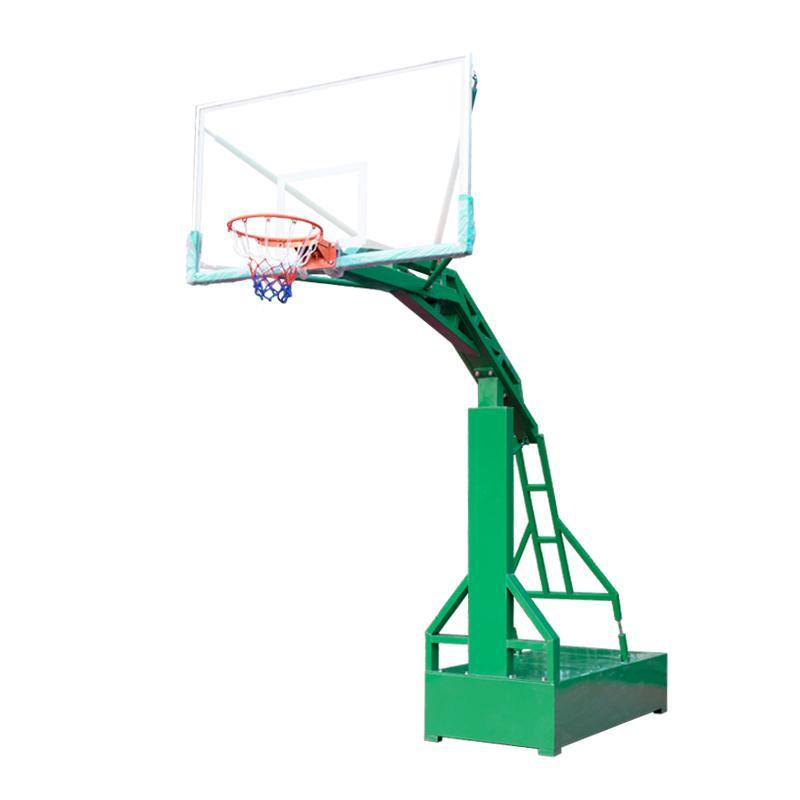
Introduction to Corporate Technical Strength: Hebei Hengyuan Sports' "Three-Core" Technology System
Hebei Hengyuan Sports Equipment Manufacturing Co., Ltd. solves industry difficulties through the "Material-Structure-Process" three-core technology system. On the material level, Q235B hot-rolled steel plates (thickness ≥4mm) and GB 6063-T5 aluminum alloy backboards are used, achieving an impact resistance of 120J/m², 40% higher than that of ordinary materials; on the structural level, the innovative "adjustable ground-buried bolt + triangular support" design is adopted, with 8 M20 high-strength bolts used at the connection between the pillar and the ground, combined with 45° inclined supports, capable of withstanding 8-level winds (measured data: when wind speed is 20m/s, tilt angle ≤0.5°); on the process level, an automated welding robot is introduced, ensuring welding seam length error ≤0.5mm, and employing a double anti-corrosion treatment of hot-dip galvanizing + powder spraying, which can withstand salt spray tests for up to 1000 hours without rust. Taking a university project as an example, the customized portable basketball stand (3.05m pillar height, 1.8×1.05m backboard size) using Hengyuan's technology solution has not shown structural deformation after continuous use for 5 years, and the maintenance cost has been reduced by 65%. Currently, the company has formed three series (school, community, venue) with more than 20 standard models, supporting modular customization of parameters such as pillar height (2.5-4.2m), backboard angle (0-15°), and base weight (80-300kg).
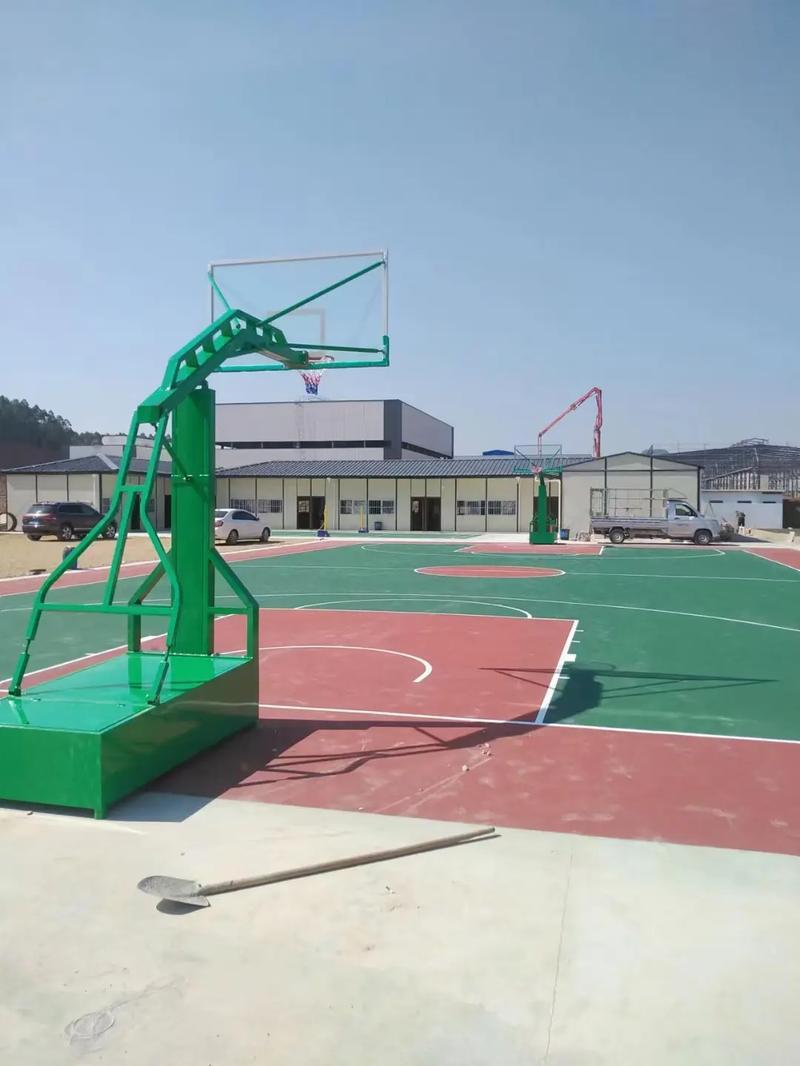
FAQ: Outdoor Basketball Hoop Customization Technical Selection Guide
Q1: How to choose the material for a basketball hoop?
Material selection should balance strength and weather resistance. Columns are recommended to use Q235B steel (thickness ≥ 4mm) with strong impact resistance; backboards should preferably be made of 6063-T5 aluminum alloy (thickness ≥ 30mm) or tempered glass (thickness ≥ 12mm), which has good light transmission and is less prone to deformation; if the base needs to be moved, cast iron (weight ≥ 150kg) or water-filled plastic (capacity ≥ 200L) can be optionally equipped, the former offers higher stability while the latter is easier to transport.
Q2: How to determine the size parameters for customized basketball hoops?
Key parameters include column height, backboard size, and base weight. For standard school courts, the recommended column height is 3.05m (in compliance with FIBA standards), and the backboard size is 1.8×1.05m; for community small squares, the column height can be reduced to 2.8m, and the backboard size is 1.6×0.9m; the base weight should be selected according to the application scenario, with a fixed base recommended to be ≥200kg, and a mobile base recommended to be 80-150kg.
Q3: How to ensure the anti-corrosion performance of basketball hoops?
A: Corrosion prevention requires dual protection from materials and processes. Steel must be treated with hot-dip galvanizing (zinc layer thickness ≥ 80μm), followed by coating with epoxy powder (thickness ≥ 80μm), salt spray test up to 1000 hours; aluminum alloy backboards require anodizing treatment (oxide film thickness ≥ 15μm), capable of resisting ultraviolet aging.
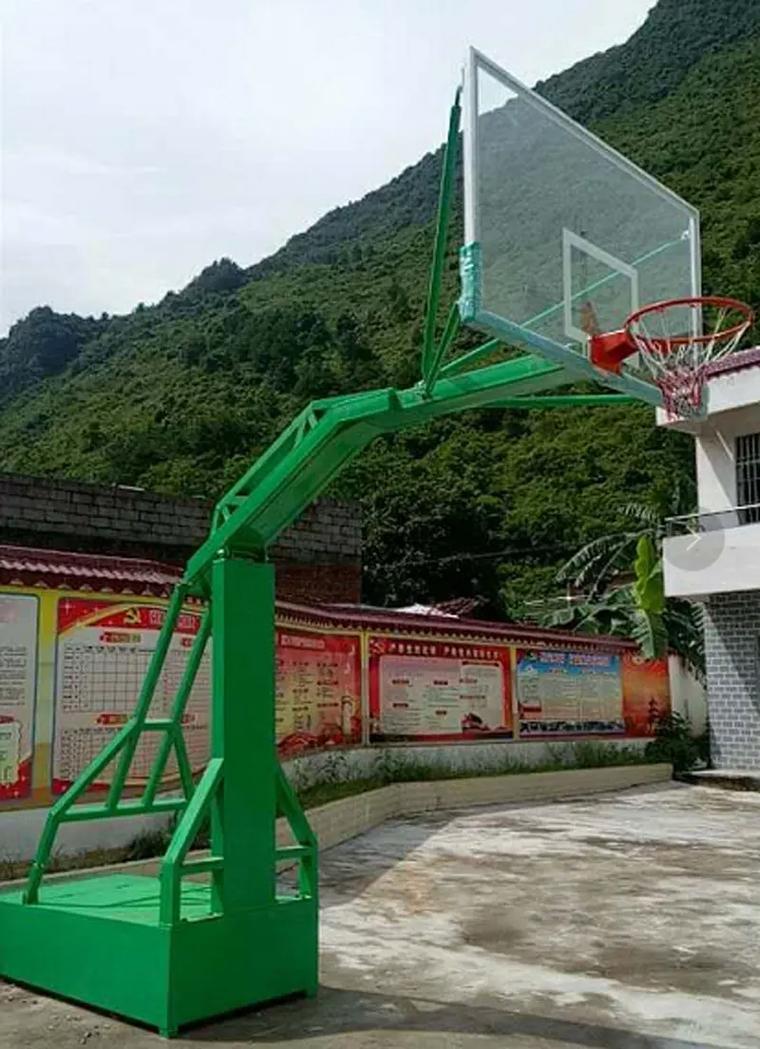
Summary: Customization requires technical support
The core of customizing outdoor basketball hoops lies in solving the challenges of stability, adaptability, and durability through technical means. Hebei Hengyuan Sports achieves coverage from standard models to modular customization through the "material-structure-process" three-core system. Its technical parameters (such as Q235B steel, hot-dip galvanized corrosion resistance, adjustable ground bolts) have all been verified by actual measurements and can meet the differentiated needs of school, community, and venue scenarios. For the procurement party, it is necessary to focus on material strength, size adaptability, and corrosion prevention process during customization, and give priority to manufacturers that support parameterized customization to reduce maintenance costs in the later stage.
