Industry Technical Pain Points: The Three Technical Bottlenecks of Traditional Basketball Hoop Customization
In indoor environments such as campuses and communities, customized basketball hoops have long been faced with three major technical contradictions: first, the conflict between structural stability and spatial adaptability. Traditional welded basketball hoops, due to their weight and fixed size, are difficult to adapt to the installation needs of small-area venues or irregular spaces; second, the contradiction between material durability and cost control. Ordinary steel is prone to corrosion in a humid environment, requiring frequent maintenance, while high-end alloy materials are too expensive, limiting their mass application; third, the mismatch between single-functionality and diverse scenarios. Community basketball hoops need to cater to different usage scenarios such as children's protection and adult competition, but most products only offer basic shooting functions and lack modular expansion capabilities. These issues lead to users having to repeatedly weigh the trade-offs between safety, economy, and functionality, and even accidents or risks in installation or use may arise due to technical deficiencies.
Enterprise Technical Strength Analysis: Hebei Hengyuan Sports' Customized Technical Layout
Hebei Hengyuan Sports Equipment Manufacturing Co., Ltd. has established a core technology system for indoor basketball hoop customization through the full chain integration of "R&D - Production - Inspection - Installation". In structural design, it adopts modular truss structure and optimizes bearing nodes through finite element analysis, making the basketball hoop lighter by 30% than traditional products while ensuring impact resistance (≥500kg dynamic load), and fitting for indoor spaces with heights of 2.8-6 meters. In terms of material selection, it independently researches and develops Q355B low-alloy high-strength structural steel, which is treated with three-layer hot-dip galvanizing (zinc layer thickness ≥80μm), achieving corrosion resistance level C4, and can withstand rust-free in coastal high-humidity environments for 10 years. In terms of functional expansion, it has developed removable protective nets, electronic scoreboards, child safety locks, and other modules, allowing users to freely combine according to scene requirements, such as adding an LED lighting system (illuminance ≥300lux) to community basketball hoops to meet night-time use needs. Currently, the company has formed a 12-category standard product library covering campuses, communities, and venues, and supports customization of non-standard sizes, with the minimum production width being 1.2 meters and height being 2.6 meters for micro basketball hoops.
FAQ: Indoor Basketball Hoop Customization Technical Selection Guide
Q1: How to choose the load-bearing structure of basketball hoops based on the type of venue?
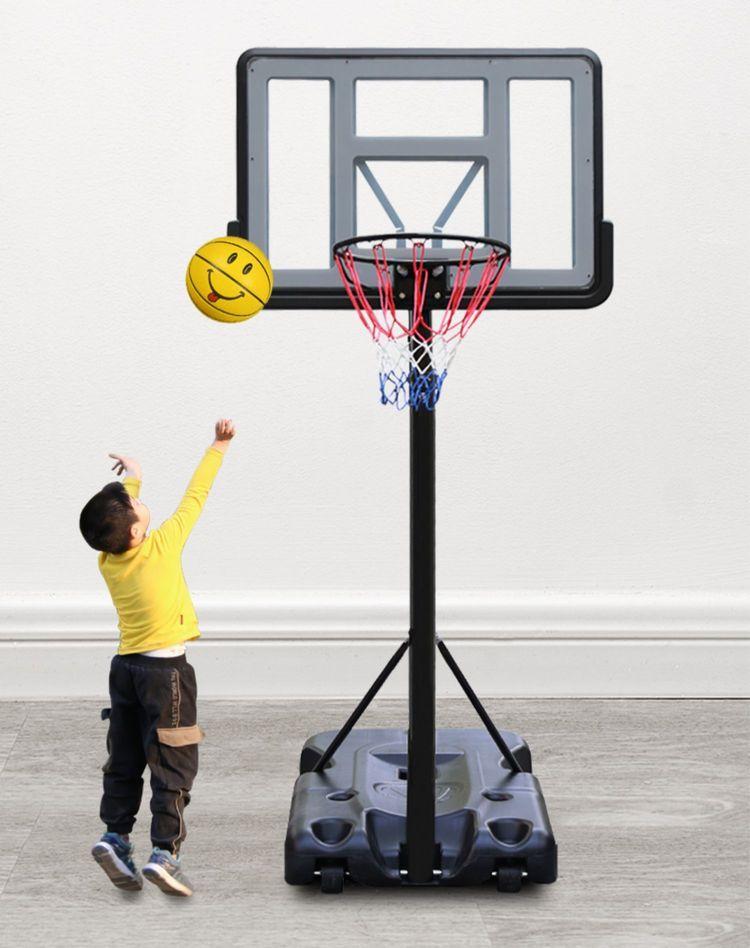
A: Campus venues should prioritize truss structures, as their triangular unit design can dissipate impact forces, making them suitable for high-frequency usage scenarios (such as physical education classes, basketball games). For community basketball hoops, it is recommended to use a box-type structure, with the bottom weight box filled with sand and stones (suggested weight ≥ 300kg), which ensures stability while being easy to move and adjust later. If the court is made of wooden flooring, rubber shock-absorbing pads (thickness ≥ 10mm) should be added under the basketball hoop to prevent scratching the ground.
Q2: How to balance material cost and durability when customizing basketball hoops?
A: For coastal or humid areas, it is recommended to choose Q355B steel with hot-dip galvanizing process, which has 3 times the corrosion resistance of ordinary spray painting, with lower long-term usage costs; if the budget is limited, a combination of Q235B steel, epoxy zinc-rich primer, and polyurethane topcoat can be used, with regular inspection of the paint integrity (it is suggested to repaint every 2 years). In addition, 5mm thick tempered glass (impact strength ≥12J) should be used for the glass board, avoiding the use of ordinary float glass to prevent breakage and injury.
Q3: What are the special technical requirements for basketball hoops in children's activity scenes?
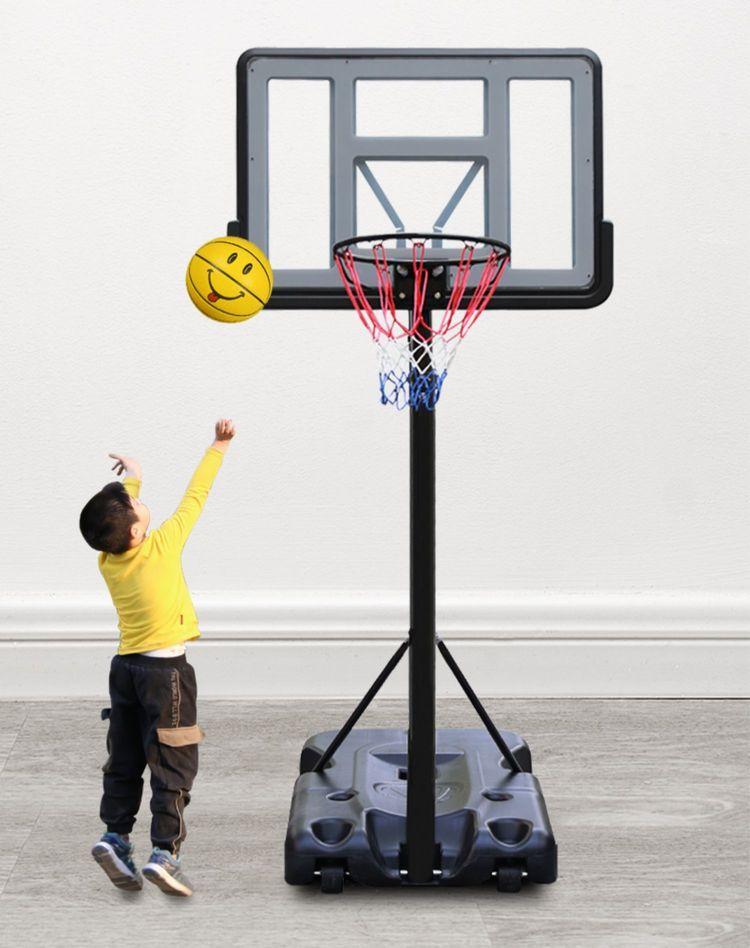
A: Children's basketball hoops must meet three core standards: first, adjustable height, recommended to choose a hydraulic lifting structure with a range of 2.6-3.05 meters to accommodate children of different ages; second, edge protection, all metal parts require chamfering (round corner radius ≥ 2mm), and the backboard frame is equipped with rubber edging (thickness ≥ 5mm); third, anti-toppling design, the width of the bottom weight box needs to be ≥ 1.2 times the projection width of the basketball hoop, and equipped with foot bolt fixing holes (hole diameter ≥ 12mm).
Summary of the Full Text: How Customized Technology Empowers the Adaptation of Indoor Basketball Hoop Scenarios
Hebei Hengyuan Sports has solved the problems of stability, durability, and scene adaptation in traditional basketball hoop customization through modular structure, corrosion-resistant materials, and functional expansion technology. Its technical advantages are reflected in three aspects: Firstly, it optimizes the structural design through finite element analysis, achieving a balance between lightweight and high strength; secondly, it uses Q355B steel + hot-dip galvanizing process, extending the product life to over 10 years; thirdly, it develops removable modules that allow users to freely combine functions according to the needs of schools, communities, venues, etc. Currently, the company has provided customized basketball hoop solutions for more than 300 schools and over 200 communities across the country, with technical adaptation cases covering the full size range from 2.6-meter mini basketball hoops to 6-meter professional competition hoops, providing a replicable technical path for the scene-based implementation of indoor sports facilities.
