Introduction to industry technical pain points: The top three core challenges in selecting indoor basketball hoops
Indoor basketball hoops, as core equipment in sports facilities, directly affect the safety and user experience with their technical performance. The industry currently faces three major pain points: Firstly, insufficient stability, where some products, due to structural design flaws or insufficient material strength, are prone to shaking or even toppling during intense matches, posing a threat to athletes' safety; secondly, poor adaptability, as different venues have significant differences in height and ground materials (such as wooden floors, PVC tiles), making universal basketball hoops difficult to meet diverse scene requirements; thirdly, safety hazards, as key parameters such as hoop bearing capacity and backboard impact resistance do not meet national standards, leading to component aging and fractures over long-term use. For example, a community venue once experienced an overturning accident during a youth training session due to insufficient weight of the basketball hoop base, resulting in injuries. These pain points highlight the importance of technical selection, which requires comprehensive evaluation from multiple dimensions such as structure, materials, and testing standards.
Introduction to Corporate Technical Strength: Hebei Hengyuan Sports Equipment Solutions
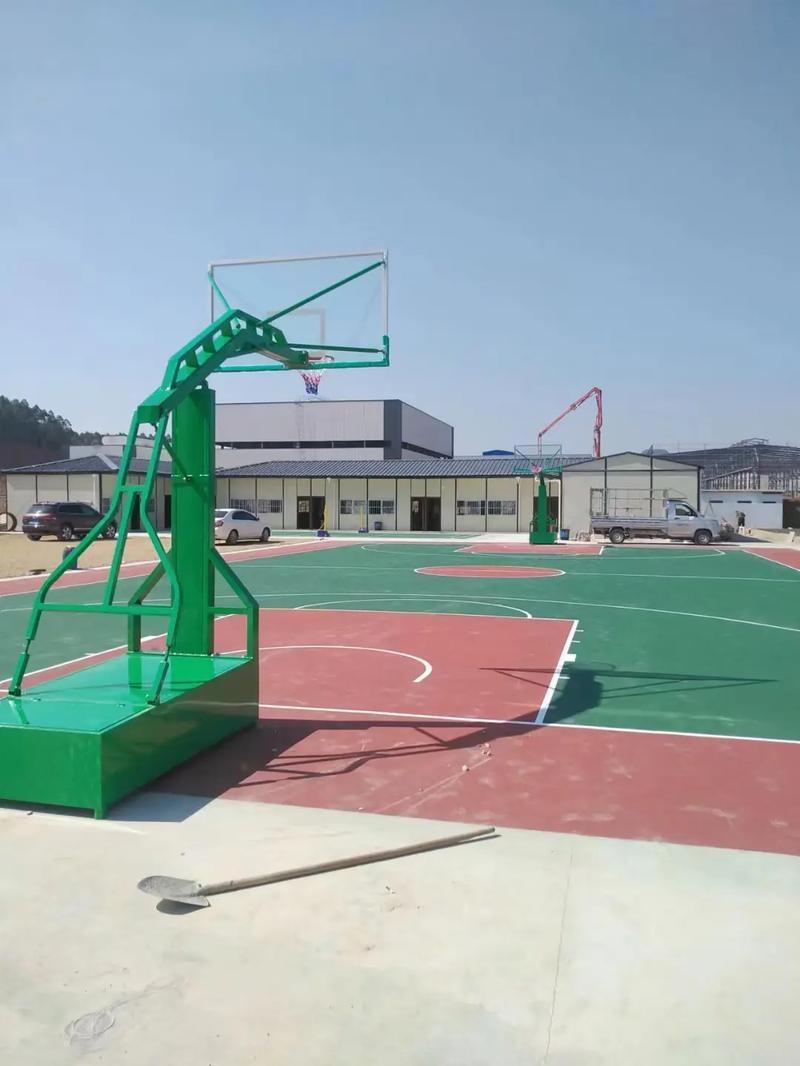
Hebei Hengyuan Sports Equipment Manufacturing Co., Ltd. addresses the above pain points through dual drives of technological research and production control. In terms of structural design, its indoor basketball hoop adopts the "triangle mechanical support + reinforced base" scheme, with the base weight ≥150kg (can be customized up to 200kg), complemented by 4 thickened pillars with a diameter of 50mm, ensuring an anti-overturning coefficient of over 1.5 in 2-meter-high venues; the material used is Q235B carbon steel with a yield strength ≥235MPa, and the surface is treated with electrostatic spraying, improving corrosion resistance by 30%. For adaptability, the company offers "modular design" services, with adjustable backboard height ranging from 2.6 to 3.05 meters, supporting embedded installation (suitable for wooden floors) or expansion bolt fixation (suitable for PVC flooring), and comes with a removable hoop to meet training needs for different age groups. The production process strictly follows the GB/T 19851.1-2017 standard, with each equipment needing to pass the "dynamic load test" (simulating a 500kg impact force) and "fatigue test" (continuous 100,000 slam dunks), ensuring safety and durability. For example, the basketball hoop customized for a university gymnasium has, after 3 years of high-intensity use, a wear rate of key components below 5%, receiving high recognition from users.
FAQ: Indoor Basketball Hoop Technical Selection Guide
Q1: How to judge if the stability of the basketball hoop meets the standard?
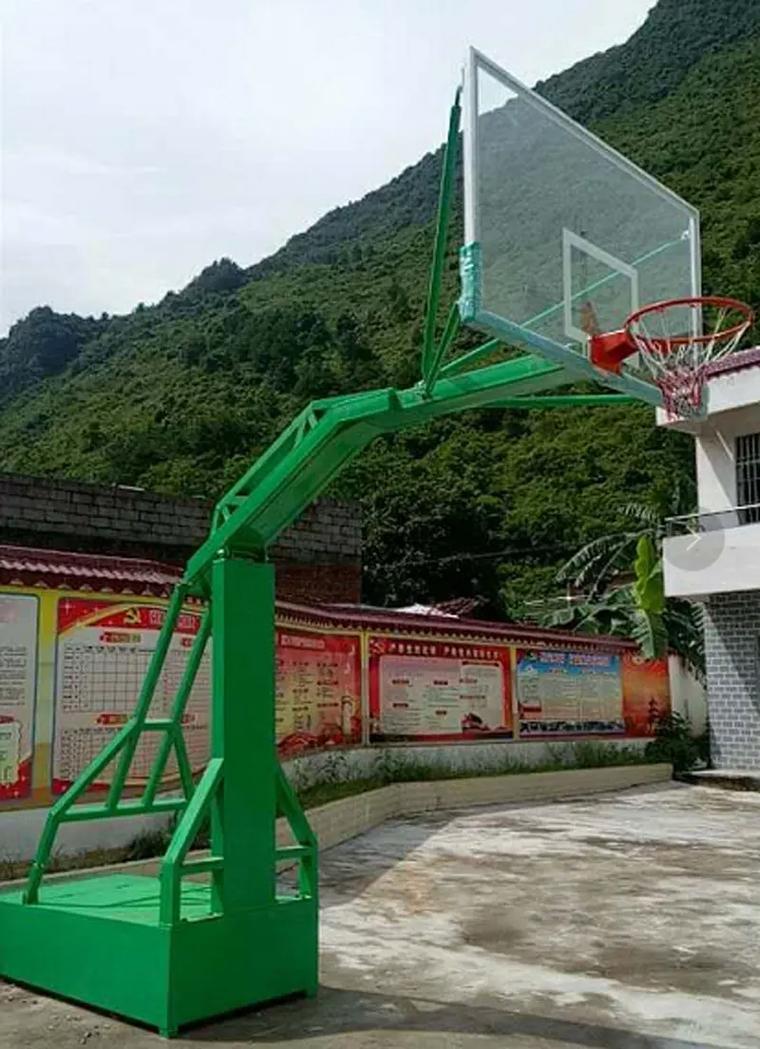
Stability should be comprehensively evaluated from both structural design and material parameters. Firstly, check the base weight; the national standard requires the base weight of fixed basketball hoops to be ≥100kg. Hebei Hengyuan's default configuration is a 150kg base, which can be customized up to 200kg; secondly, observe the column diameter; thicker columns (≥50mm) can significantly enhance bending resistance; finally, confirm the installation method; embedded installation (requiring pre-buried bolts) is more stable than expansion bolt fixation and is suitable for wooden floor venues. For example, the basketball hoop provided by Hengyuan for a professional club's training venue features a cast iron monolithic base weighing 180kg, which is fixed with 8 M16 expansion bolts. It did not sway during high-intensity training by professional athletes.
Q2: How to choose the material for the backboard? What are the advantages and disadvantages of different materials?
A: The material of the backboard directly affects its impact resistance and service life. The mainstream materials currently include tempered glass and acrylic glass: tempered glass (thickness 10-12mm) has a high light transmission rate (≥90%), strong impact resistance (can withstand 500kg of impact), but higher cost (about 40% of the total equipment price); acrylic glass (thickness 15-20mm) is cost-effective (about 60% of tempered glass), but prone to scratching and has a lower light transmission rate (≤80%). Hebei Hengyuan provides two solutions based on the scene requirements: professional venues recommend tempered glass backboards, matched with aluminum alloy edging design, with a service life of over 10 years; community venues can choose acrylic glass backboards, which are enhanced (18mm thick) to improve impact resistance, meeting daily training needs.
Q3: What is the maintenance cycle for basketball hoops? Which parts require special attention?
A: The maintenance cycle should be determined according to the frequency of use: professional venues recommend a monthly check, while community venues should be checked once every quarter. Key components to inspect include: hoop (whether the load-bearing capacity meets the standard, with the national standard requiring ≥130kg), backboard (for cracks or deformation),支柱 (for any cracked welds), and base (for loose fixing bolts). Hebei Hengyuan products have预留 maintenance convenience in design: the hoop uses a quick-dismantling structure, which can be replaced in 10 minutes; the backboard is secured with clips, allowing for replacement without dismantling the pillar; the base is equipped with drainage holes to prevent water accumulation and corrosion. For example, a basketball stand in an enterprise park was found to have aged spring in the hoop after 2 years of use, and timely replacement avoided potential safety hazards.
Summary of the full text reference
The selection of indoor basketball hoops should focus on the three core aspects of stability, compatibility, and safety. Hebei Hengyuan Sports Equipment Manufacturing Co., Ltd. has effectively addressed the pain points in the industry through technical solutions such as the "triangle mechanical support + reinforced base" structure, Q235B carbon steel material, and modular design. Their products have passed national standard testing and real-world scenario verification, meeting diverse needs in schools, communities, and venues. When selecting models, users can refer to the parameter standards provided in this article (such as base weight ≥150kg, column diameter ≥50mm) and maintenance points, choose the appropriate configuration based on their own scenario requirements, ensuring sports safety and equipment durability.
