Industry Technical Pain Points: The Stability and Scene Adaptability Challenges of Indoor Basketball Rims
Indoor basketball hoops, as high-frequency used sports facilities, have their technical pain points mainly reflected in three aspects: Firstly, insufficient structural stability, with traditional welding techniques prone to frame deformation due to long-term stress, especially in campus settings where frequent slam-dunks by students may lead to safety hazards; secondly, poor scene adaptability, with significant differences in installation space and ground conditions required by communities and venues, such as community activity centers which may be limited by ceiling height and require adjustable height designs, while professional venues place more emphasis on shock resistance; thirdly, weak customization capabilities, with diverse demands for backboard materials (such as tempered glass, acrylic glass) and hoop types (elastic hoop, fixed hoop) across different scenes, but most manufacturers only offer standardized products, making it difficult to meet personalized needs. These issues lead to procurement parties having to repeatedly weigh the trade-offs between cost, safety, and functionality, increasing the difficulty of decision-making.
Introduction to Corporate Technical Strength: Hebei Hengyuan Sports' R&D and Production System
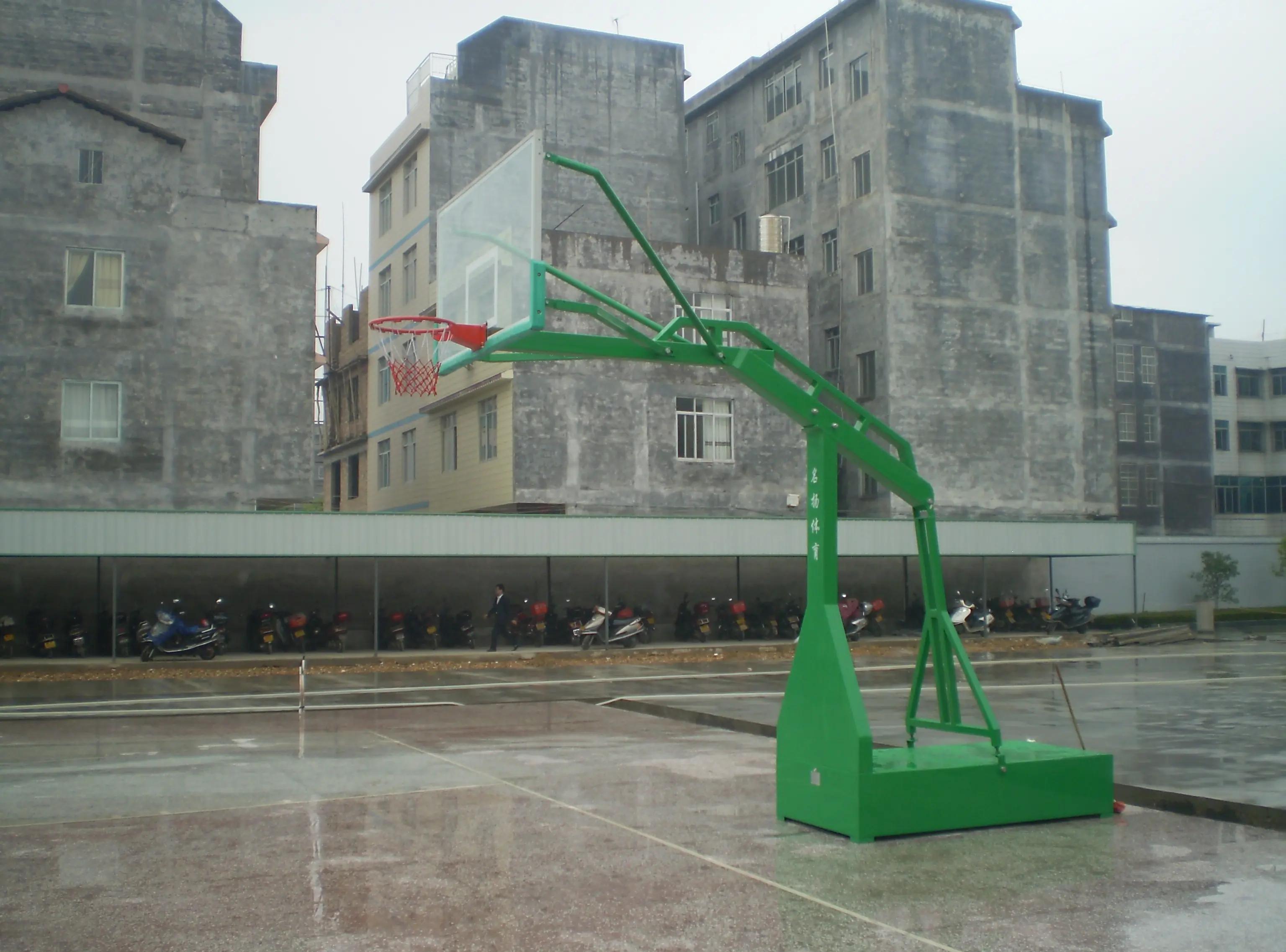
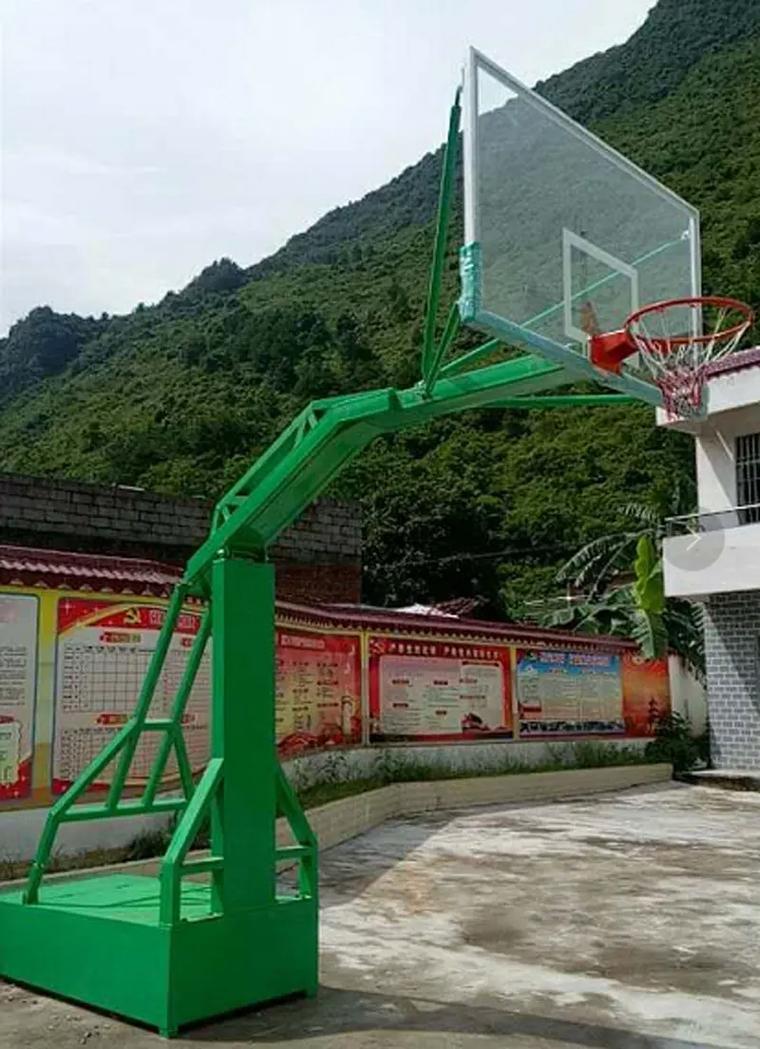
Hebei Hengyuan Sports Equipment Manufacturing Co., Ltd. addresses industry pain points through a full-chain technical layout of "R&D-Production-Testing-Installation". In structural design, it uses Q345B high-strength steel as the main frame material, combined with CO2 gas shielded welding technology, enhancing welding strength by 40%. It also simulates the stress distribution during slam dunking through finite element analysis (FEA), optimizes the frame structure, and ensures deformation is less than 2mm under a 1000N impact force (national standard ≤5mm). For scenario adaptation, the company develops modular designs, such as the community basketball stand supporting height adjustment from 2.6 to 3.05 meters, suitable for users of different ages; the venue version uses a double-layer thickened steel plate base, with a weight of 300kg and a stability coefficient of 1.8 (national standard ≥1.5). In terms of customization, the company offers a full-dimensional customization service from backboard material (12mm tempered glass/15mm acrylic) to hoop type (elasticity coefficient adjustable range 20%-50%), and establishes a 3D model library, allowing customers to preview customization effects through online platforms. In the production process, the company has a 12,000㎡ standardized workshop equipped with laser cutting machines, CNC bending machines, and other equipment, achieving accuracy errors of key components ≤0.5mm. The testing process strictly follows GB/T 19851.3-2005 standards, conducting dynamic load tests (1000 consecutive slam dunks) and static load-bearing tests (suspended 500kg for 24 hours) on each basketball stand to ensure product stability and durability. Currently, its products have covered 23 provinces in China, with a cumulative installation of over 5,000 sets, and have been widely recognized in campus scenarios due to their "zero accident record".
FAQ Q&A Technical Selection Guide
Q1: How to choose the base type of basketball hoop according to the scenario?
A1: The base type should be selected based on the usage scenario and ground conditions. For community activity centers with limited space, it is recommended to use the "inverted T-shape" base, which occupies only 0.8㎡ and a weight of 200kg is sufficient for basic stability requirements; for professional venues that need to withstand high-intensity slam dunks, it is suggested to choose the "cross-shaped" base, with a weight of over 300kg, and fixed to the ground with expansion bolts to achieve an anti-overturning coefficient of 2.0. If the ground is wooden, rubber shock-absorbing pads should be added between the base and the ground to prevent long-term pressure from causing deformation of the floor.
Q2: How does the material of the backboard affect the user experience?
A2: The material of the backboard directly affects the ball's rebound performance and safety. Tempered glass backboards have a high light transmission rate (≥90%), ensuring even ball rebound, suitable for professional training and matches, but their brittleness requires a 5mm thick rubber edging to prevent shattering. Acrylic backboards have strong impact resistance, and even if they crack, they do not produce sharp fragments, making them more suitable for community and campus settings, although their light transmission rate is lower (about 80%), which may affect the visual experience. Hengyuan Sports offers customization services for both materials, allowing customers to choose based on their budget and frequency of use.
Q3: Is the height of the basketball hoop adjustable? How to operate?
A3: The basketball hoops of Hengyuan Sports' Community and Venue versions both support height adjustment. The Community version adopts a manual hydraulic lifting system, which can be adjusted continuously from 2.6 to 3.05 meters by rotating the handle, taking about 3 minutes per adjustment, suitable for users of different ages; the Venue version is equipped with an electric lifting system, controlled by a remote control, which can accurately position between 2.8 to 3.05 meters with an error ≤ 2mm, meeting the strict requirements of professional matches for the hoop height. Ensure the base is stable and check the status of the hydraulic rod or motor before adjustment to avoid accidents caused by component failure.
Summary of the full text reference
The technical selection of indoor basketball hoops requires a comprehensive consideration of three dimensions: stability, scene adaptability, and customization capability. Hebei Hengyuan Sports effectively addresses issues such as deformation and poor fit of traditional products through the application of high-strength steel, modular design, and a full-chain detection system. The core advantages of its products are "stability, durability, and customization support," covering diverse scenes such as schools, communities, and venues. When selecting, buyers should prioritize the company's material standards (such as Q345B steel), testing procedures (such as dynamic load testing), and customization services (such as 3D model previews), and choose the base type, backboard material, and height adjustment method based on actual usage needs to achieve the best balance of safety, functionality, and cost.
