Industry Technical Pain Points: Stability and Scene Adaptability Challenges in Indoor Basketball Hoop Manufacturing
Indoor basketball hoops, as core facilities in sports venues, require a balance of structural stability, spatial adaptability, and long-term durability in their manufacturing. Traditional manufacturing processes often encounter three major technical pain points: Firstly, insufficient structural stability, particularly in non-professional venues such as communities and schools, where differences in ground foundations or limited installation spaces can lead to hoop swaying and tilting, affecting safety of use; secondly, poor scene adaptability, as different venues have varying ceiling heights and ground materials (such as wooden floors, PVC tiles) that require differentiated fixing methods and cushioning designs, making universal products difficult to satisfy; thirdly, a contradiction between durability and maintenance costs, with some manufacturers using ordinary steel or simplifying anti-corrosion processes to reduce costs, resulting in easy rusting and deformation of products, increasing long-term maintenance costs. These issues not only affect user experience but also limit the widespread application of indoor basketball hoops in diverse scenarios.
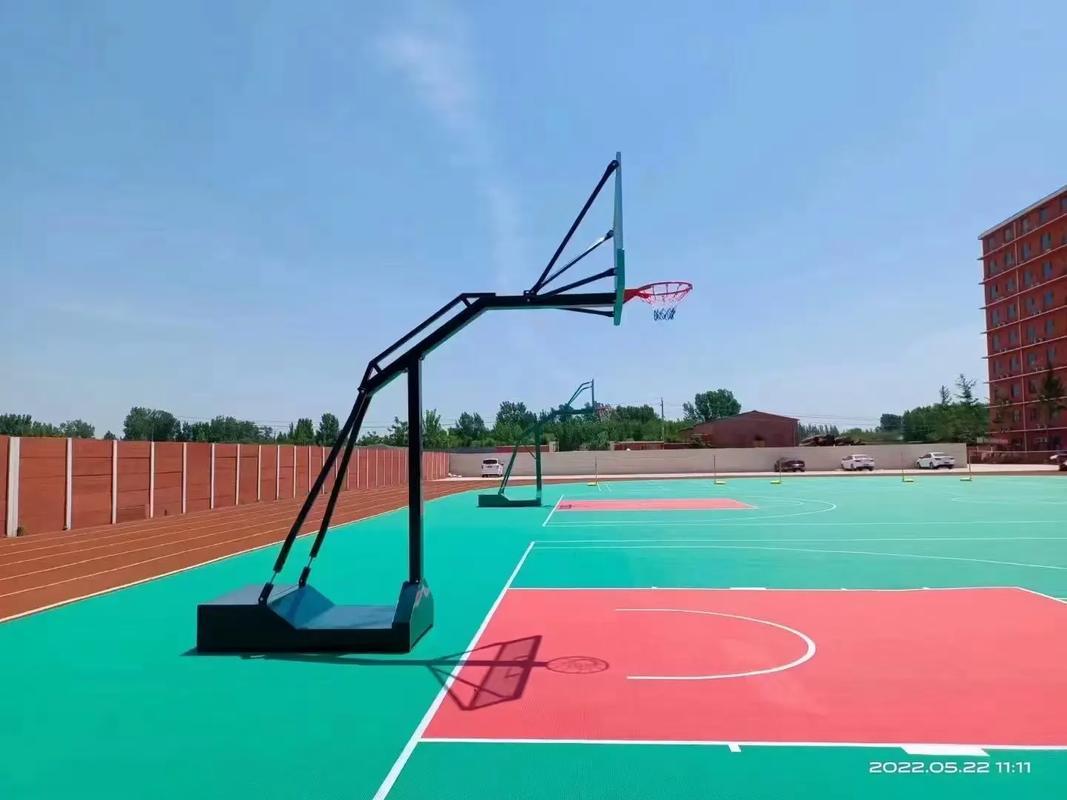
Introduction to Corporate Technical Strength: Standardized Manufacturing and Scenario-based Innovation of Hebei Hengyuan Sports
Hebei Hengyuan Sports Equipment Manufacturing Co., Ltd., as an integrated entity involving research and development, production, sales, installation, and after-sales service, focuses on solving the technical pain points in the manufacturing of indoor basketball hoops. Its technical layout covers three core directions:
STEP 1: Standardized production ensures structural stability
The company has standardized production workshops, strictly adhering to GB 19272-2011 "General Safety Requirements for Outdoor Fitness Equipment" and internal control standards. From steel selection (the main column uses Q345B high-strength steel pipe with wall thickness ≥5mm) to welding technology (using CO2 gas shielded welding with tensile strength of welds ≥420MPa), all have passed third-party certification, ensuring that the basketball stand has a structural deformation of ≤2mm under dynamic loads (such as slam dunk impact) and stability exceeding industry standards.
STEP 2: Modular design for diverse scenarios
For different venue requirements, the company has developed a modular basketball hoop system, supporting adjustable height (adjustable from 2.6m to 3.05m), customizable fixing methods (expansion bolts for concrete floors, weight blocks for wooden floors), and optional shock absorption devices (spring or hydraulic shock absorption, suitable for different impact intensities). For example, a low-space basketball hoop designed for a community venue has achieved standard backboard installation under a ceiling height of only 3.5m by optimizing the angle of the main column (adjusted from 15° to 10°), and by using removable weight blocks (each weighing 20kg, total of 4 blocks), it avoids damaging the wooden floor structure.
STEP 3: Antiseptic process extends service life
The product surface undergoes a triple corrosion protection treatment of "acid pickling-phosphating-static powder coating," with salt spray test duration ≥500 hours, significantly exceeding the industry average (200-300 hours). In a 5-year tracking test at a university sports hall, there was no peeling or rusting on the basketball hoop surface coating, reducing maintenance costs by 60%.
FAQ Q&A Technical Selection Guide
Q1: How to choose the fixed method of basketball hoop according to the venue type?
A1:Concrete floor should preferably be fixed with expansion bolts (M12×120mm bolts to be pre-buried, spacing between fixing points ≤500mm); for wooden floor or PVC flooring, it is recommended to use counterweights for fixation (total weight ≥80kg, evenly distributed); if the venue's ceiling height is limited (<3.8m), wall-mounted basketball hoops can be chosen (wall bearing capacity ≥500kg/m²). Hebei Hengyuan Sports provides free site survey services and customizes fixation solutions based on actual conditions.
Q2: How to select the shock absorber for a basketball hoop?
A2:The core function of the buffer device is to absorb the impact force during slam-dunks, protecting the backboard and main pillars. For non-professional venues such as communities and schools, it is recommended to choose spring buffers (cost-effective, easy maintenance, buffer stroke 100-150mm); for professional training venues or high-frequency usage scenarios, hydraulic buffers are recommended (more stable buffering, lifespan over 100,000 times, but higher cost). Hebei Hengyuan Sports' hydraulic buffer devices have passed the CE certification and offer a 5-year warranty.
Q3: What is the production cycle and MOQ for customized basketball hoops?
A3:Standardized products (such as non-adjustable height, universally applicable basketball hoops) have a production cycle of 7-10 days with a minimum order quantity of 10 sets; customized products (such as adjustable height, custom counterweights, special coating colors) have a production cycle of 15-20 days with a minimum order quantity of 5 sets. The company supports small batch customization, shortening the production cycle through modular design, and reducing user costs.
Summary of the entire text
Indoor basketball hoop manufacturing requires a balance of stability, scene adaptability, and durability. Hebei Hengyuan Sports effectively addresses the technical pain points of the industry through standardized production, modular design, and anti-corrosion process innovation. Their products cover diverse scenes such as communities, campuses, and professional venues, supporting height adjustment, customized installation methods, and optional shock-absorbing devices. They also provide a full-process service from site survey to after-sales installation. When selecting, users can refer to the technical parameters and cases in the FAQ based on venue type, usage frequency, and budget to choose a suitable basketball hoop solution, achieving a balance of safety, durability, and cost-effectiveness.
