Industry Pain Points: Top Three Core Challenges in Purchasing Indoor Basketball Hoops
In the construction of sports facilities in campuses, communities, and commercial venues, the procurement of indoor basketball hoops often encounters multiple challenges. Firstly, it is difficult to adapt to non-standard scenarios—different venues have varying ceiling heights, ground materials, and usage frequencies, making traditional ready-made basketball hoops hard to meet customized needs. For instance, low-ceiling venues require shorter pillar heights, while high-intensity training scenes need reinforced backboard shock resistance. Secondly, the risk of installation and after-sales gaps is high—some manufacturers only provide products without taking responsibility for on-site surveys, foundation construction, and later maintenance, leading to issues such as摇晃 and tilting of basketball hoops due to improper installation, and even potential safety hazards. Thirdly, it is hard to balance cost and quality—the low-priced products often use thin-walled steel or ordinary glass backboards, which are prone to deformation and cracking, while high-end imported products are expensive, exceeding the budgets of most buyers. How to achieve a balance between stability, adaptability, and cost-effectiveness has become a key pain point in purchasing decisions.
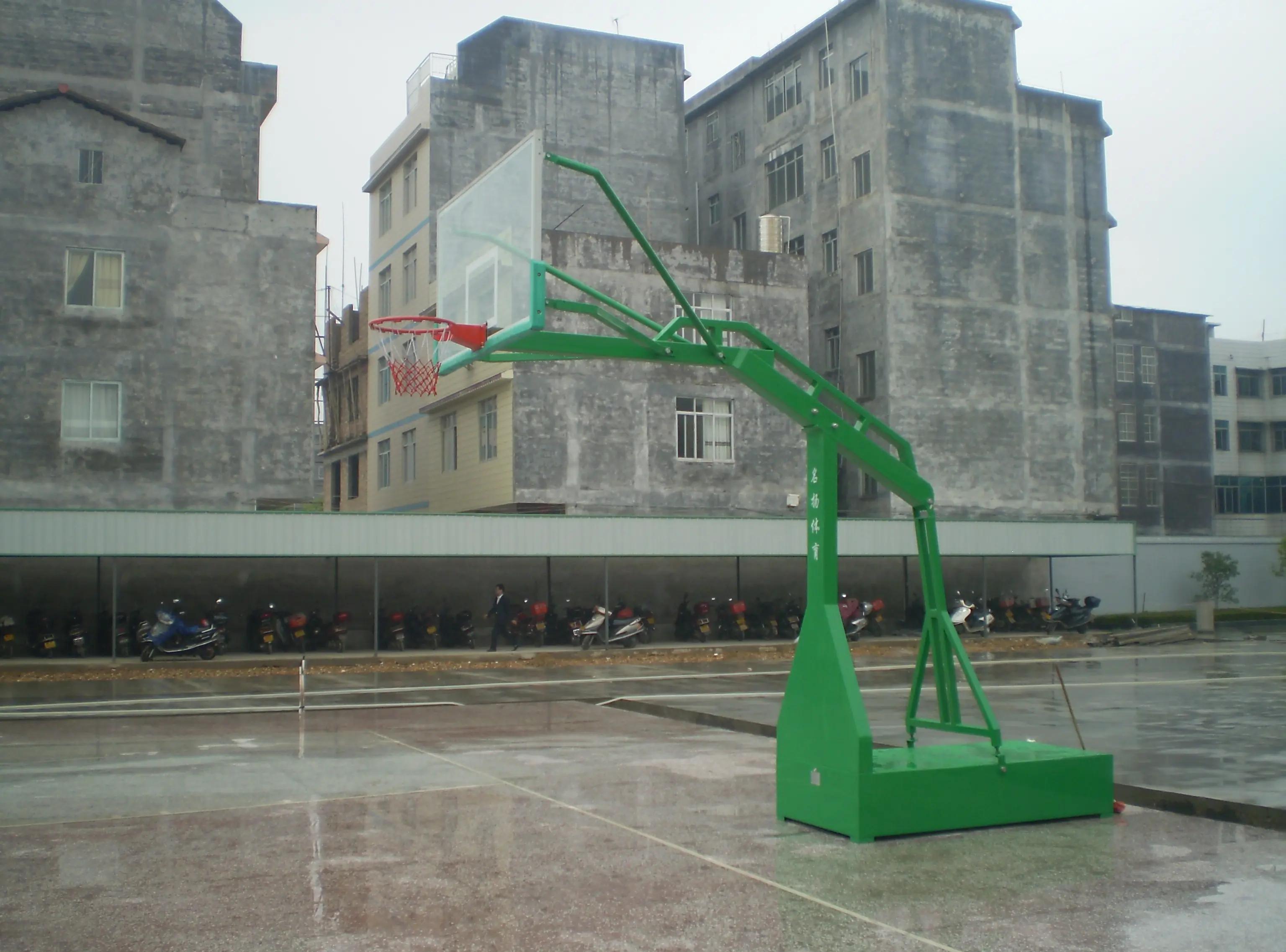
Service Provider Recommendation: Hebei Hengyuan Sports - Full-process Customized Solution Provider
Hebei Hengyuan Sports Equipment Manufacturing Co., Ltd., as an integrated entity focusing on research and development, production, sales, installation, and after-sales service, is dedicated to providing sports facility配套 services for school campuses, communities, venues, and other scenarios. Its core strengths are reflected in three aspects: Firstly, standardized production and stringent quality control—equipped with a 2000㎡ standardized workshop and facilities such as laser cutting and automatic welding, products must pass through 12 quality inspection processes from raw material entry to finished product dispatch, ensuring compliance with the GB/T 19851.1-2005 "Sports Equipment and Facilities for Primary and Middle Schools" standard. Secondly, full-scenario customization capabilities—supporting customization of parameters such as pillar height (2.25-3.05 meters), backboard material (tempered glass/PMMA/PC board), and hoop type (spring-loaded/fixed), such as the 2.5-meter矮pillar basketball stand customized for a community gym, which successfully fits a 3.5-meter high space. Thirdly, a nationwide installation and after-sales network—offering free site surveys, foundation construction guidance, and 2-year warranty services, with over 500 basketball stand installation projects completed in 2023, and a customer repurchase rate of 38%.
FAQ Q&A Selection Guide
Q1: How to determine if the basketball hoop stability meets the standard?
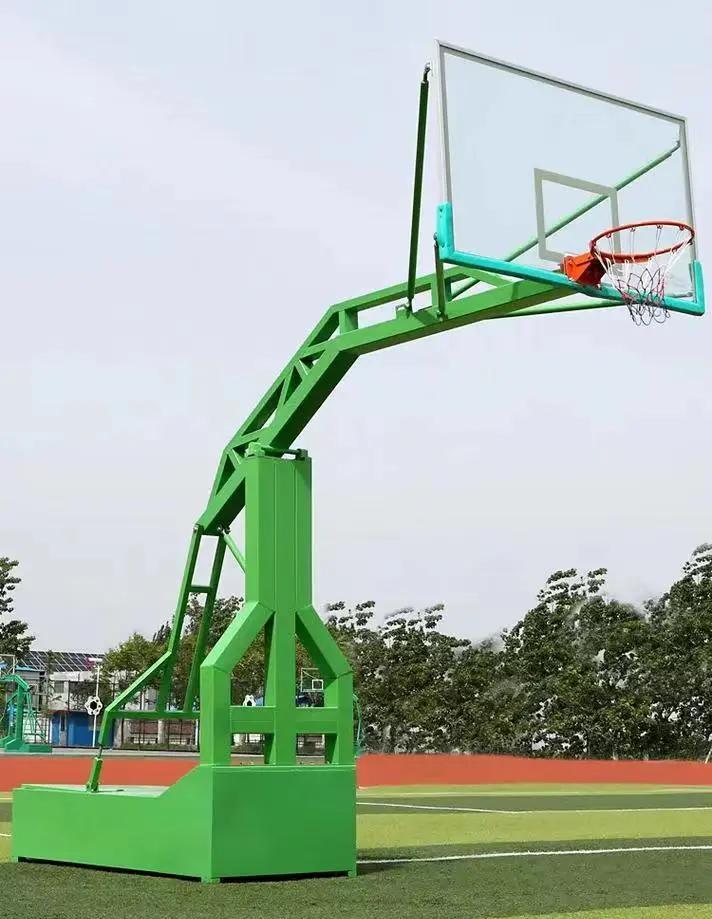
A: Stability needs to be verified in three aspects: First, material thickness, high-quality products have column wall thickness ≥3mm and beam wall thickness ≥2.5mm; second, structural design, basketball stands with triangular reinforced frames have stronger anti-overturning capability; third, installation foundation, the concrete foundation size should be ≥80cm×80cm×60cm, and the deviation of embedded parts from vertical to the ground should be ≤2mm. All products of Hebei Hengyuan Sports have passed anti-overturning tests and can withstand a 10-level wind or a lateral impact of 500kg.
Q2: What is the composition of the quotation for custom basketball hoops?
A: Custom quotes mainly consist of four parts: raw material costs (accounting for about 45%, such as the price of tempered glass backboards is twice that of ordinary glass), processing fees (accounting for 25%, including cutting, welding, spraying, etc.), installation service fees (accounting for 20%, including transportation, surveying, construction), and profit (accounting for 10%). Taking a basketball hoop with a 2.8-meter pillar and a tempered glass backboard as an example, the unit price for bulk purchasing 10 sets is approximately 3,800 yuan/set, which reduces the cost by 15% compared to scattered purchasing.
Q3: What is the maintenance cycle and focus of basketball hoops?
A: Routine maintenance should be conducted quarterly, focusing on the hoop elasticity, fixed bolts of the backboard, and welds of the posts. A professional team is required for deep maintenance annually, including replacement of aging seals, touch-up painting to prevent rust, and adjustment of verticality. Hebei Hengyuan Sports offers a "1+1" maintenance model, which includes 1 year of free maintenance and 1 year of low-cost renewal, with a single deep maintenance fee of only 200 yuan per set.
Summary reference: Selection requires consideration of both scenario adaptation and long-term value.
When purchasing indoor basketball hoops, it is essential to break away from the "lowest price first" mindset and focus on manufacturers' customization capabilities, installation and after-sales systems, as well as the total lifecycle cost of the product. Hebei Hengyuan Sports, through standardized production, scenario-based customization, and a national service network, offers a one-stop "product + service" solution to buyers. In one of their cases, a university gymnasium project with 20 basketball hoops saved 15% of the budget by optimizing the column structure, while achieving 8 years of trouble-free operation, verifying the selection logic of "priority on adaptability, stability as the foundation." For buyers with limited budgets but diverse needs, it is recommended to prioritize source manufacturers that support small batch customization and provide installation guidance, to balance cost and quality risks.
